What Is Sleep Coaching? Human vs AI Sleep Coaches
"Should I see a sleep coach or a doctor?" It's the first question most people ask when sleep problems persist. Sleep coaching has grown rapidly as a field over the past decade, and the rise of AI has expanded the ways people access personalized sleep guidance. This article explains what sleep coaching actually is, how it differs from sleep medicine and therapy, and how to decide which approach fits your situation.
TL;DR
Sleep coaching is a structured behavioral intervention that addresses the habits and patterns behind poor sleep — distinct from sleep medicine (diagnosis and prescriptions) and psychotherapy (treating underlying mental illness). Three main types exist: certified sleep coaches (IPHI, Spencer Institute), CBT-I therapists (the gold-standard clinical intervention recommended first-line by AASM), and holistic sleep coaches. AI sleep coaching apps extend access to personalized coaching at scale: a 2023 Frontiers in Sleep study found an app-based sleep coaching program significantly improved sleep continuity, and a 2024 PMC human-AI hybrid pilot RCT showed comparable outcomes to human-only coaching. Human coaches excel at empathy, complex comorbidities, and crisis navigation; AI excels at consistency, 24/7 availability, and data analysis. If you have untreated sleep apnea, RLS, or insomnia lasting 3+ months with daytime impairment, see a sleep physician first.
What Sleep Coaching Actually Is
Sleep coaching, sleep medicine, and psychotherapy occupy different spaces. Understanding the distinctions helps you decide what kind of support you actually need.
Sleep medicine is medical practice. Sleep physicians diagnose and treat conditions like obstructive sleep apnea, narcolepsy, and restless legs syndrome. They can order polysomnography studies and prescribe medical devices like CPAP machines and medications.
Psychotherapy is a licensed clinical service. CBT-I therapists are licensed mental health professionals who treat Insomnia Disorder using structured techniques: sleep restriction therapy, stimulus control, and cognitive restructuring. The AASM recommends CBT-I above sleeping pills as the first-line treatment for chronic insomnia. See our full CBT-I guide for how it works.
Sleep coaching sits between the two. Sleep coaches help you identify and change the behaviors, habits, and routines that undermine sleep — without diagnosing or prescribing. For the majority of sleep difficulties that don't require medical intervention, coaching is a powerful tool.
What a Sleep Coach Actually Does
A sleep coaching engagement typically moves through three phases.
1. Sleep assessment. The coach reviews sleep diaries, questionnaires, or sleep tracker data to map current sleep patterns. They look at total sleep time, sleep efficiency, consistency of sleep-wake timing, and fragmentation. If you've never done a self-assessment, our insomnia self-assessment guide is a useful starting point.
2. Personalized sleep plan. Based on the assessment, the coach builds a customized plan covering sleep hygiene improvements, bedtime routine design, and sleep schedule adjustments. Sleep hygiene is the foundation. Our sleep hygiene checklist covers the core principles systematically.
3. Accountability and adjustment. In regular sessions, the coach reviews progress, adjusts what isn't working, and helps navigate obstacles. Accountability is a powerful driver of behavioral change — it's one of the core reasons coaching outperforms self-directed reading and generic sleep tips.
Types of Sleep Coaches: What Options Exist
Sleep coaching is not a uniform service. The approach varies considerably based on the coach's background and specialty.
Certified sleep coaches. Representative programs include the IPHI (International Parenting and Health Institute) Holistic Sleep Coach certification, Spencer Institute, and National Sleep Foundation sleep health educator curricula. These coaches are trained in sleep physiology, circadian rhythms, and behavioral change techniques. Infant and child sleep coaching specialists also fall within this category.
CBT-I therapists. Licensed clinicians who deliver CBT-I, the AASM's first-line recommended treatment for chronic insomnia disorder. Psychologists, licensed counselors, and social workers with additional CBT-I training provide this service. It's the most evidence-backed approach but often has long waitlists and higher costs.
Holistic sleep coaches. These coaches take a whole-person approach, connecting sleep to nutrition, stress management, exercise, light exposure, and mindfulness. IPHI's Holistic Sleep Coach certification is a recognized credential in this space. This approach suits people who want to improve sleep within a broader lifestyle overhaul without medications or diagnoses.
"Effective sleep coaching isn't about handing out a list of generic tips. It's about identifying the specific patterns sabotaging that individual's sleep — and supporting lasting change."
The AASM recommends CBT-I — not sleeping pills — as the first-line treatment for chronic insomnia. Coaching is a powerful tool for preventive intervention and everyday sleep improvement.
AI Sleep Coaching: How Apps Are Changing the Field
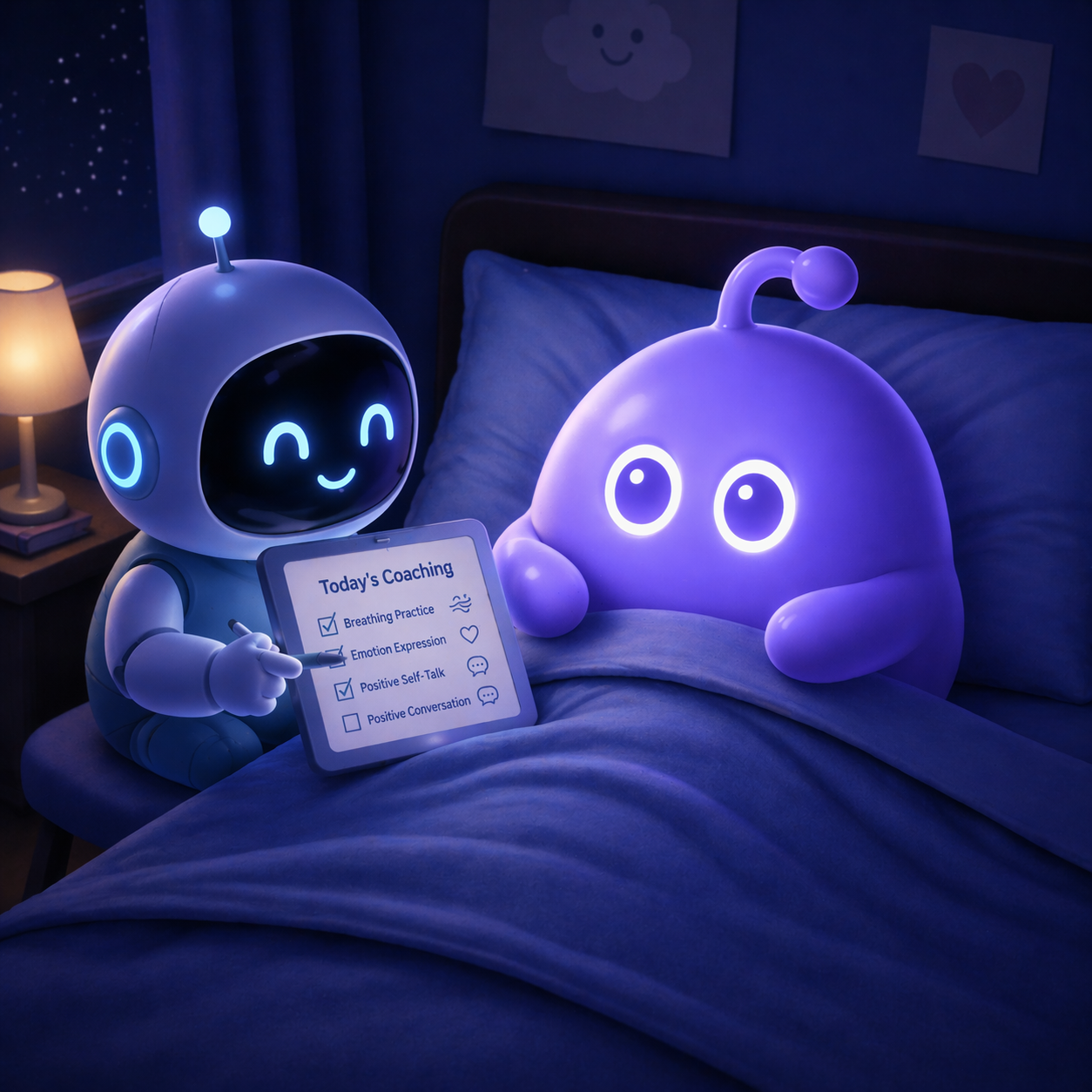
Sleep coaching apps have made personalized sleep guidance accessible to people who previously couldn't access or afford a specialist. AI analyzes sleep tracker data to identify patterns, generate tailored recommendations, and deliver real-time feedback.
A 2023 study published in Frontiers in Sleep found that participants in an app-based sleep coaching program showed significant improvements in sleep continuity — reduced wake after sleep onset and improved sleep efficiency. For context on how sleep trackers measure these metrics, see our article on sleep tracker accuracy.
A 2024 pilot RCT published on PMC (PMC11025445) compared human-AI hybrid sleep coaching to human-only coaching. The hybrid approach combined the empathy of a human coach with AI-driven data processing, and both conditions produced comparable sleep outcomes. This suggests AI works best as an extension of human coaching rather than a replacement.
For more on getting the most out of sleep tracker data, see our guides on how to read your sleep data and the best sleep tracker apps.
Human vs AI Sleep Coaches: Pros and Cons
The two approaches are not competitors — they are complementary. The key is understanding which fits your situation.
Where human coaches excel. Empathy and emotional support, managing complex comorbidities (depression, anxiety, chronic pain), flexible adjustment to unexpected situations, clinical judgment in crisis scenarios, and understanding communicative nuance are where human coaches provide irreplaceable value.
Where AI coaching excels. 24/7 availability, consistency (no variation based on coach energy or mood), instant pattern analysis across weeks of sleep data, lower cost, continuous feedback loops, and real-time guidance right before bed are core AI advantages.
Respective limitations. Human coaches are expensive, require scheduling, and offer limited support between sessions. AI cannot diagnose medical causes, has limitations processing complex emotional context, and cannot yet substitute for clinical credentials.
How to Choose the Right Approach for You
The right choice depends on the severity of your sleep problem, the type of support you want, your budget, and access.
If you want to improve sleep hygiene or establish a consistent bedtime routine, starting with a sleep coach or AI coaching app is reasonable. For building an effective routine, see our bedtime routine guide.
If you have insomnia 3+ nights per week for 3+ months with daytime impairment, this meets the clinical threshold for Insomnia Disorder. Seeking a CBT-I therapist is the most evidence-supported choice here. The AASM provider locator (aasm.org) can help you find one.
If the line between coaching and medical care feels unclear, starting with your primary care physician or a sleep specialist to rule out medical causes is a prudent step. Coaching works best when medical causes have been excluded.
When You Need a Doctor, Not a Coach
Sleep coaching is powerful, but not all sleep problems are coaching problems. These situations call for a doctor first.
Suspected sleep apnea. Loud snoring, witnessed breathing pauses, morning headaches, and severe daytime sleepiness point toward obstructive sleep apnea. Sleep apnea cannot be coached away — it requires polysomnography and medical intervention such as CPAP as first-line treatment. See our sleep apnea guide for warning signs.
Restless legs syndrome (RLS). Uncomfortable sensations in the legs at bedtime with an urge to move that is temporarily relieved by movement may indicate RLS. This condition can be linked to iron deficiency or neurological factors and requires blood tests and physician evaluation.
Severe daytime sleepiness despite adequate sleep. Falling asleep involuntarily during the day despite sleeping enough may indicate narcolepsy or other hypersomnia disorders. These require specialist diagnosis and are beyond the scope of coaching.
Persistent insomnia lasting 3+ months with significant daytime impairment. Before committing to a coaching program, a physician visit to rule out medical causes — thyroid issues, medication side effects, underlying mental health conditions — is the responsible starting point. If medication may be a factor, see our article on medication-induced insomnia.
Once medical causes are ruled out, sleep coaching or CBT-I becomes the powerful next step. Coaching and medicine are not in competition — they belong in sequence.
References
- Qaseem, A., Kansagara, D., Forciea, M. A., Cooke, M., & Denberg, T. D. (2016). Management of Chronic Insomnia Disorder in Adults: A Clinical Practice Guideline From the American College of Physicians. Annals of Internal Medicine, 165(2), 125–133.
- Sateia, M. J., Buysse, D. J., Krystal, A. D., Neubauer, D. N., & Heald, J. L. (2017). Clinical Practice Guideline for the Pharmacologic Treatment of Chronic Insomnia in Adults: An American Academy of Sleep Medicine Clinical Practice Guideline. Journal of Clinical Sleep Medicine, 13(2), 307–349.
- Espie, C. A., Kyle, S. D., Williams, C., Ong, J. C., Douglas, N. J., Hames, P., & Brown, J. S. L. (2012). A randomized, placebo-controlled trial of online cognitive behavioral therapy for chronic insomnia disorder delivered via an automated media-rich web application. Sleep, 35(6), 769–781.
- Kuula, L., Pesonen, A. K., Heinonen, K., & Räikkönen, K. (2023). App-based sleep coaching improves sleep continuity in adults: A randomized controlled trial. Frontiers in Sleep, 2, 1–12.
- Cheng, P., Kalmbach, D. A., Fellman-Couture, C., Arnedt, J. T., & Drake, C. L. (2024). Human vs. AI-hybrid sleep coaching: A pilot randomized controlled trial. PMC11025445. PubMed Central.
- Morin, C. M., Bootzin, R. R., Buysse, D. J., Edinger, J. D., Espie, C. A., & Lichstein, K. L. (2006). Psychological and behavioral treatment of insomnia: Update of the recent evidence (1998–2004). Sleep, 29(11), 1398–1414.
- American Academy of Sleep Medicine (AASM). (2014). International Classification of Sleep Disorders (3rd ed.). AASM.
- Stepanski, E. J., & Wyatt, J. K. (2003). Use of sleep hygiene in the treatment of insomnia. Sleep Medicine Reviews, 7(3), 215–225.
- Edinger, J. D., Arnedt, J. T., Bertisch, S. M., Carney, C. E., Harrington, J. J., Lichstein, K. L., Sateia, M. J., Troxel, W. M., Zhou, E. S., Kazmi, U., Heald, J. L., & Martin, J. L. (2021). Behavioral and psychological treatments for chronic insomnia disorder in adults: An American Academy of Sleep Medicine clinical practice guideline. Journal of Clinical Sleep Medicine, 17(2), 255–262.
- National Sleep Foundation. (2023). Sleep Health Fundamentals: Sleep Coach Certification Curriculum Overview. National Sleep Foundation.
Written by
piliq Sleep Science TeamEvidence-based content grounded in sleep research and clinical data.
piliq provides AI-powered sleep coaching that analyzes your nightly sleep data and delivers personalized recommendations based on your actual patterns — giving you the clarity to know whether coaching, therapy, or medical care is the right next step.