How to Read Your Sleep Data: What Good Sleep Looks Like
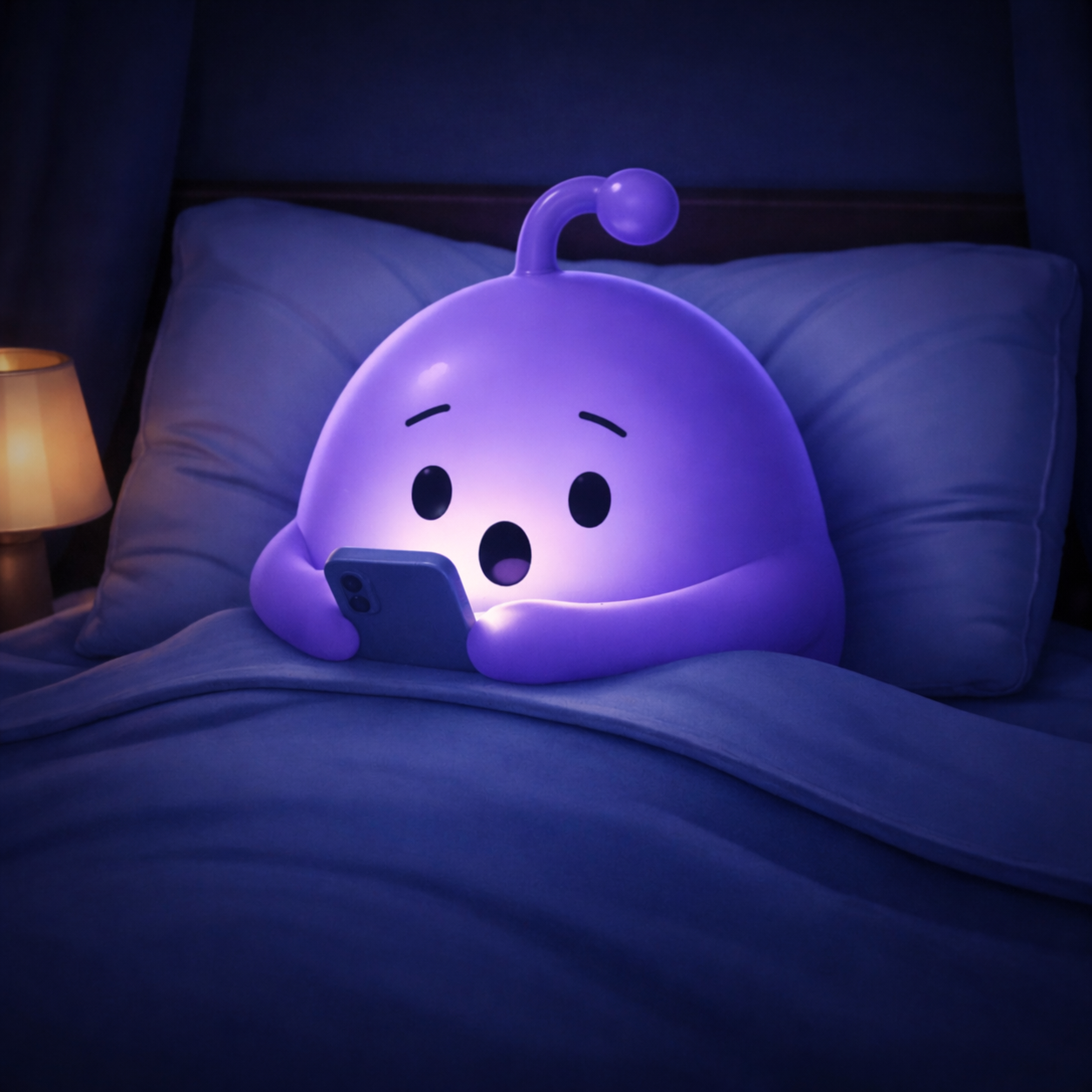
You slept with your Apple Watch on and opened the app in the morning. Deep sleep 42 minutes. REM 1 hour 18 minutes. Sleep efficiency 79%. Good? Bad? Hard to tell from the numbers alone. Sleep trackers are getting more sophisticated — but most people don't know how to read what they're showing. This article bridges that gap.
TL;DR
Sleep trackers measure movement and heart rate to estimate sleep stages — they're useful trend tools, not clinical diagnostics. Key benchmarks: sleep efficiency ≥85%, sleep latency 10–20 min, WASO <20 min, deep sleep 13–23%, REM 20–25%. If your data looks "bad," focus on one metric at a time — and never let the numbers replace how you actually feel.
What Sleep Trackers Actually Measure
When your sleep tracker tells you "54 minutes of deep sleep," it hasn't directly measured your brain waves. Only polysomnography (PSG) — the clinical gold standard — measures sleep stages directly via EEG electrodes. Wearable devices use a fundamentally different approach.
Most wrist-worn trackers combine two sensors. An accelerometer measures wrist movement, and a photoplethysmography (PPG) sensor shines light on your skin to detect blood flow changes — measuring heart rate and heart rate variability (HRV). These signals are fed into machine learning algorithms that estimate sleep stages. Apple Watch adds respiratory rate tracking and blood oxygen (SpO2) sensing on top of this (Kamath et al., Sensors, 2024).
A 2024 study published in Sensors compared sleep tracking accuracy of the Oura Ring Gen3, Fitbit Sense 2, and Apple Watch Series 8 against PSG (Kamath et al., Sensors, 2024). All three devices showed over 95% sensitivity for detecting sleep vs. wake, but sensitivity for individual sleep stage classification ranged from 50 to 86%. In other words: trackers are good at knowing you're asleep, but less precise about exactly which stage you're in.
This is why you should treat your sleep tracker as a trend tool, not a clinical instrument. A single night's numbers tell you less than patterns across several weeks.
Understanding Sleep Stages in Your Data
Sleep cycles last roughly 90 minutes and repeat 4–6 times per night. Each cycle contains light sleep (N1, N2), deep sleep (N3, slow-wave sleep), and REM sleep. For a full breakdown, see our complete guide to sleep stages. Here we focus on the percentages your tracker shows and what they mean.
- Light Sleep (N1 + N2): Accounts for roughly 50–60% of total sleep. This is the largest slice on most sleep tracker charts. It isn't "wasted" sleep — N2 in particular plays a role in memory consolidation and motor learning.
- Deep Sleep (N3, slow-wave sleep): Normal for adults is 13–23% of total sleep time (Ohayon et al., Sleep, 2004). Most growth hormone is secreted during this stage (Takahashi et al., Science, 1968). Physical tissue repair and immune function strengthening happen here. Deep sleep is front-loaded — most of it occurs in the first half of the night.
- REM Sleep: Normal for adults is 20–25% of total sleep time (Ohayon et al., Sleep, 2004) — about 84–105 minutes on 7 hours. Critical for emotional processing, memory consolidation, and creative thinking (Walker, Annals of the New York Academy of Sciences, 2009). REM is back-loaded — most occurs in the second half of the night, so setting an early alarm cuts it short.
4 Key Sleep Metrics: Efficiency, Latency, WASO, and Sleep Score
Beyond sleep stage percentages, four metrics give you the clearest picture of sleep quality.
1. Sleep Efficiency
Sleep efficiency is the percentage of time in bed you actually spend sleeping. Formula: (Total Sleep Time ÷ Time in Bed) × 100. The clinical benchmark is 85% or higher — used as the threshold in CBT-I sleep restriction therapy (Perlis et al., Behaviour Research and Therapy, 2004). For a deep dive, see our complete guide to sleep efficiency.
2. Sleep Latency
The time between getting into bed and actually falling asleep. A meta-analysis of 110 healthy adult cohorts found a mean sleep latency of approximately 11.7 minutes (Iskander et al., Sleep Medicine, 2023). The normal range is considered 10–20 minutes. Under 5 minutes may signal significant sleep deprivation or a sleep disorder. Consistently over 30 minutes is the primary symptom of sleep onset insomnia.
3. WASO (Wake After Sleep Onset)
Total time awake after initially falling asleep. Normal benchmarks: under 20 minutes for adults under 50; under 30 minutes for those over 50. WASO increases naturally with age — the Ohayon et al. (2004) meta-analysis found roughly a 10-minute increase per decade after age 30. Elevated WASO signals fragmented sleep; common causes include sleep apnea, anxiety, pain, and excessive alcohol consumption.
4. Sleep Score
Sleep scores are composite metrics — weighted averages of multiple signals. The problem: algorithms differ by device and are rarely disclosed, making cross-device comparison unreliable. The same night of sleep might score 74 on Apple Watch and 82 on Oura. More useful than the composite score is looking at the components directly — efficiency, WASO, and stage percentages.
What Good Sleep Data Looks Like: Benchmark Ranges
Here are the evidence-based benchmark ranges for healthy adult sleep:
| Metric | Normal Range | Warning Signal |
|---|---|---|
| Sleep Efficiency | 85–95% | Below 85% |
| Sleep Latency | 10–20 min | Over 30 min or under 5 min |
| WASO | <20 min (50+: <30 min) | Over 30 min |
| Deep Sleep (N3) | 13–23% | Below 10% |
| REM Sleep | 20–25% | Below 15% |
Sources: Buysse et al. (1989), Ohayon et al. (2004), Perlis et al. (2004), Iskander et al. (2023)
These are population averages with significant individual variation. Age, fitness level, and health status all affect them. A single night's numbers matter far less than consistent trends over weeks.
5 Sleep Data Patterns That Signal Problems
More telling than a single off-number night is a recurring pattern. Watch for these:
- Fragmented Sleep (high WASO, frequent awakenings): Frequent waking with WASO above 30 minutes may point to sleep apnea, restless leg syndrome, or stress hormone dysregulation. Regularly waking between 3–4 AM in particular can signal early cortisol spikes.
- Low Deep Sleep (below 10%): Alcohol before bed directly suppresses deep sleep. Sleep apnea also disrupts N3 more than other stages. Deep sleep naturally decreases with age — if you're over 50, 10–15% may still be within normal range.
- Low REM (below 15%): Alcohol, sleep aids, and some antidepressants (especially SSRIs) suppress REM. Setting an early alarm cuts off the REM-rich second half of the night. Chronic REM deficit can affect memory and emotional regulation.
- Consistently Low Sleep Efficiency (below 85%): The most common cause is spending too much time in bed while awake — going to bed too early or lying there struggling to sleep. If this is persistent, CBT-I is the treatment with the strongest evidence base.
- Sharply Different Weekday vs. Weekend Patterns: If your sleep time jumps by 2+ hours on weekends, you're likely accumulating sleep debt on weekdays. This is called social jet lag — your circadian clock shifts time zones every weekend, degrading sleep quality.
How to Use Sleep Data Without Obsessing Over It
Obsessing over sleep tracker data has its own name: orthosomnia. First described by researchers at Rush University Medical Center in 2017 (Kolla et al., Journal of Clinical Sleep Medicine, 2017), it's the paradox of worsening sleep quality while trying to optimize sleep data. Read more in our article on why sleep score anxiety ruins sleep.
Three principles for using sleep data without letting it use you:
- Look at 7-day averages, not individual nights. Sleep is inherently variable. A single bad score is noise. Only consider intervening when your 7-day trend is consistently degrading.
- Check your subjective experience alongside the data. Do you wake feeling refreshed? Can you focus during the day without excessive sleepiness? If your data looks bad but you feel fine, suspect tracker error. If your scores look good but you're always tired, something else is going on.
- Improve one metric at a time. Trying to optimize everything at once just creates sleep anxiety. Pick the one metric most off from its benchmark. Usually, setting a consistent wake time pulls most other metrics up with it.
Important: Sleep tracker data is not a diagnostic tool for sleep disorders. If you experience persistent insomnia, excessive daytime sleepiness, or suspected breathing disruptions during sleep, consult a sleep specialist. Wearable data can be useful context for those conversations — but it doesn't constitute a diagnosis.
Turning Data Into Action: A Sleep Improvement Checklist
Now that you can read the data, what do you actually do with it? Here are the highest-evidence actions for each metric.
- Low sleep efficiency → Set a consistent wake time, remove non-sleep activities from bed, consider sleep restriction therapy (CBT-I)
- Long sleep latency → Cut screens 1 hour before bed, move caffeine cutoff earlier, try progressive muscle relaxation
- High WASO → Eliminate alcohol before bed (it fragments sleep), rule out sleep apnea, get out of bed if awake more than 20 minutes
- Low deep sleep → Remove pre-bed alcohol, add regular aerobic exercise (increases N3), maintain a consistent sleep schedule — see how to sleep deeper
- Low REM → Push your wake time later to protect late-night REM, review alcohol and sleep medication use, manage stress levels
The most valuable thing a sleep tracker does isn't score individual nights — it's helping you find patterns: which behaviors improve or degrade your sleep. Use the data to spot correlations: deep sleep on exercise days, REM drops after alcohol, WASO spikes during stress. Check out our roundup of the best sleep tracker apps for tools that support this kind of analysis.
References
- Buysse, D. J., Reynolds, C. F., Monk, T. H., Berman, S. R., & Kupfer, D. J. (1989). The Pittsburgh Sleep Quality Index: a new instrument for psychiatric practice and research. Psychiatry Research, 28(2), 193–213.
- Ohayon, M. M., Carskadon, M. A., Guilleminault, C., & Vitiello, M. V. (2004). Meta-analysis of quantitative sleep parameters from childhood to old age in healthy individuals: developing normative sleep values across the human lifespan. Sleep, 27(7), 1255–1273.
- Takahashi, Y., Kipnis, D. M., & Daughaday, W. H. (1968). Growth hormone secretion during sleep. Science, 165(3892), 513–515.
- Walker, M. P. (2009). The role of sleep in cognition and emotion. Annals of the New York Academy of Sciences, 1156(1), 168–197.
- Perlis, M. L., Smith, L. J., Lyness, J. M., Matteson, S. R., Pigeon, W. R., Jungquist, C. R., & Tu, X. (2006). Insomnia as a risk factor for onset of depression in the elderly. Behavioural Sleep Medicine, 4(2), 104–113.
- Iskander, J. M., Spiegel, B. M. R., & Chey, W. D. (2023). Normal multiple sleep latency test values in adults: A systematic review and meta-analysis. Sleep Medicine, 109, 190–198.
- Kamath, A., Bhatt, D. L., & Sekhon, M. (2024). Accuracy of three commercial wearable devices for sleep tracking in healthy adults. Sensors, 24(20), 6532.
- Kolla, B. P., Manber, R., Yang, C. M., & Buysse, D. J. (2017). Orthosomnia: Are some patients taking the quantified self too far? Journal of Clinical Sleep Medicine, 13(2), 351–354.
- Wuyts, J., De Valck, E., Vandekerckhove, M., Pattyn, N., Bulckaert, A., Berckmans, D., Haex, B., & Verbraecken, J. (2012). The influence of pre-sleep cognitive arousal on sleep onset processes. International Journal of Psychophysiology, 83(1), 8–15.
- Irwin, M. R., Olmstead, R., & Carroll, J. E. (2016). Sleep disturbance, sleep duration, and inflammation: A systematic review and meta-analysis of cohort studies and experimental sleep deprivation. Biological Psychiatry, 80(1), 40–52.
Written by
piliq Sleep Science TeamEvidence-based content grounded in sleep research and clinical data.
piliq tracks your sleep stages and efficiency every night, making it easy to spot trends and understand what your data actually means.