Melatonin Sleep Guide: Right Dose, Side Effects, and When It Actually Works
Most people taking melatonin are taking 10 to 30 times more than they need. The effective dose for shifting your circadian clock and shortening sleep onset is 0.3 to 0.5 mg — yet walk into any pharmacy and the standard pill is 5 to 10 mg. That gap matters, and not just because excess melatonin goes to waste. New research suggests long-term high-dose use may carry real cardiovascular risk.
TL;DR
The effective melatonin dose for sleep is 0.3–0.5 mg — not the 5–10 mg sold in most pharmacies. Higher doses saturate receptors without producing more benefit. Melatonin is a circadian signal, not a sedative: it works for jet lag and delayed sleep phase disorder, but has little clinically significant effect on general insomnia. A preliminary AHA 2025 study found a 3.5x higher heart failure hospitalization rate in long-term users — a signal worth taking seriously. piliq analyzes your sleep patterns to help you understand whether melatonin or a behavioral change is the right tool.
What Is Melatonin, and How Does It Work?
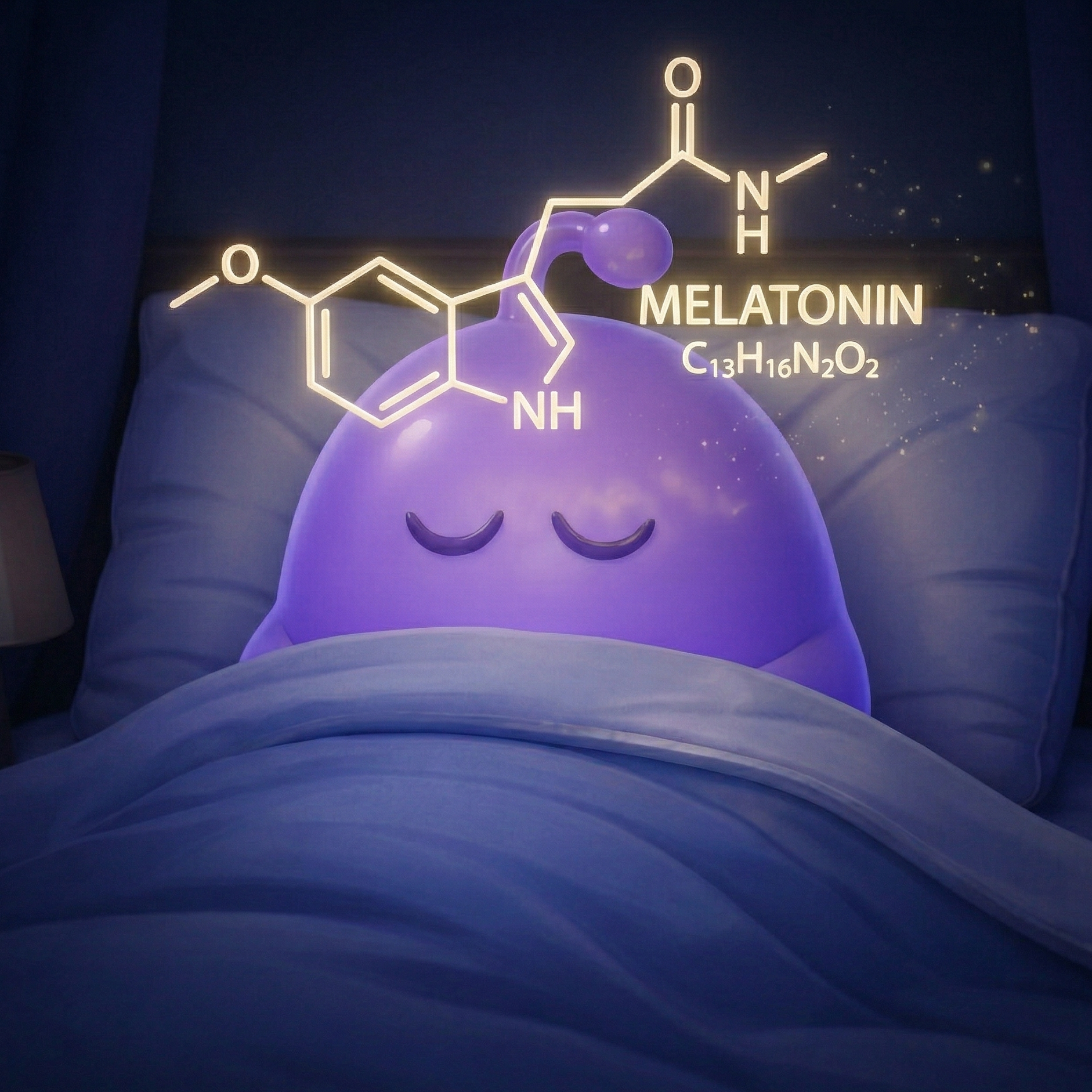
Melatonin is a hormone your pineal gland secretes in response to darkness. Its job is not to knock you out. It is a circadian signal — a chemical clock-hand that tells your brain "it is nighttime now." Your body starts releasing melatonin about two hours before your usual bedtime, peaks around 2–3 AM, and tapers off by morning.
Unlike sleeping pills or antihistamines, melatonin does not sedate you. It repositions your body clock. Taking melatonin when your circadian rhythm is misaligned — such as after crossing time zones — genuinely helps. A Cochrane systematic review found melatonin to be "remarkably effective" at reducing jet lag symptoms when taken at the destination's bedtime, particularly on eastward flights crossing five or more time zones.
How Much Melatonin Should You Actually Take?
Research has repeatedly shown that 0.3–0.5 mg is as effective as higher doses. A landmark study published in The Lancet (Brzezinski et al., 2005) found that physiological doses in the 0.3 mg range matched or outperformed pharmacological doses of 3 mg and above on sleep onset and circadian phase-shifting. The reason higher doses underperform is receptor saturation. Once melatonin receptors (MT1 and MT2) are saturated, additional melatonin does not produce additional benefit.
A meta-analysis found that melatonin shortens sleep onset latency by approximately 7 minutes on average. That is a real but modest effect. The same meta-analysis found no significant improvement in total sleep time or sleep efficiency.
Does Melatonin Have Side Effects?
Short-term use at low doses (0.3–0.5 mg) appears safe for most healthy adults. Reported side effects include daytime drowsiness, headache, dizziness, and nausea.
A preliminary study presented at the AHA Scientific Sessions 2025 reported that adults who took melatonin long-term had a heart failure hospitalization rate of 19%, compared to 6.6% in controls — a 3.5x difference. This is a preliminary finding that has not yet been peer-reviewed, and the study does not establish causation. The practical takeaway is not "throw away your melatonin" — it is "don't use it nightly as a permanent fix if you don't need it."
Is Long-Term Melatonin Use Safe?
We do not yet have strong long-term safety data in healthy adults. Most studies run 4–13 weeks. Habitual melatonin use can suppress your body's endogenous melatonin production.
For chronic insomnia, cognitive behavioral therapy for insomnia (CBT-I) has a far stronger evidence base than melatonin. A systematic review by Buscemi et al. in the BMJ found that melatonin "does not appear to have a clinically meaningful effect on insomnia" when the problem is not circadian in origin.
When Does Melatonin Actually Help?
Melatonin works best in three situations:
- Jet lag — take 0.5mg at destination's local bedtime for 2–4 nights after eastward flight crossing 5+ time zones.
- Delayed sleep phase disorder — if you can't sleep until 2–4 AM, low-dose melatonin taken 5–6 hours before current sleep time can shift rhythm earlier.
- Shift workers — moderate evidence, high individual variation.
For everyday sleep difficulties — racing thoughts, stress, general insomnia — melatonin is not the right tool.
"Melatonin is a circadian signal, not a sedative. Taking it for general insomnia is like using a compass to fix a broken clock."
What Actually Triggers Your Body's Own Melatonin?
Your body releases melatonin when it gets two things: consistent darkness and a stable sleep schedule. Bright light — especially blue-spectrum light from phones — suppresses melatonin within minutes. A 2019 Harvard study found that two hours of evening screen exposure suppressed melatonin by as much as 23%.
Reducing caffeine intake in the afternoon matters too. Breathing exercises done 20–30 minutes before bed lower cortisol, creating conditions under which melatonin can do its job more effectively. Building a solid sleep hygiene routine is the most reliable foundation.
Frequently Asked Questions
How much melatonin should I take for sleep?
The effective dose for shifting your circadian rhythm and reducing sleep onset time is 0.3 to 0.5 mg — not the 5 to 10 mg found in most commercial products. Research shows that higher doses saturate melatonin receptors without producing additional benefit, and extend elevated melatonin levels well into the morning. Start with 0.3 mg taken 30 to 60 minutes before your target bedtime.
Is it safe to take melatonin every night?
Short-term use at low doses appears safe for most healthy adults, but long-term nightly use carries unresolved questions. A preliminary study at the AHA Scientific Sessions 2025 found a heart failure hospitalization rate of 19% in long-term melatonin users versus 6.6% in controls. This finding is not yet peer-reviewed and does not prove causation, but it is a signal worth taking seriously. Daily melatonin use can also suppress your body's natural production over time.
Does melatonin actually improve sleep quality?
Melatonin shortens the time it takes to fall asleep by approximately 7 minutes on average, based on multiple meta-analyses. It does not significantly extend total sleep time or improve sleep architecture (deep sleep, REM sleep). For circadian-related problems like jet lag or delayed sleep phase disorder, the benefit is meaningful. For general insomnia driven by stress or behavioral factors, melatonin has little clinically significant effect.
piliq analyzes your sleep patterns and lifestyle to tell you whether melatonin is right for you — and what to actually change to sleep better.