Magnesium for Sleep: Does It Work and Which Type Should You Take?
Magnesium for sleep is one of the most well-researched natural remedies available today, and the evidence says it works. A meta-analysis of multiple clinical trials found that magnesium supplementation reduced sleep onset time by an average of 17 minutes compared to placebo. If you are lying in bed staring at the ceiling, that is a meaningful difference.

TL;DR
Magnesium activates GABA receptors to calm your nervous system, with studies showing it reduces sleep onset time by up to 17 minutes. About 48% of Americans are low in magnesium, which can directly disrupt sleep. Magnesium glycinate is the top choice: high absorption, easy on the stomach, and paired with calming glycine. Take 200-400mg of elemental magnesium 30-60 minutes before bed. Combining magnesium with L-theanine may amplify the calming effect through overlapping GABA and NMDA pathways.
How Does Magnesium Help You Sleep?
Magnesium works on sleep through two main pathways in your brain.
The first is GABA. GABA (gamma-aminobutyric acid) is your nervous system's natural brake pedal. It slows down nerve activity and tells your brain to stop firing so fast. Magnesium directly binds to GABA receptors and makes them more active. The result: a calmer, quieter mind at bedtime. Low magnesium levels mean your GABA system is essentially working with one hand tied behind its back.
The second pathway is cortisol. Cortisol is your main stress hormone. When magnesium levels are adequate, it helps regulate the release of cortisol throughout the day and night. Research has shown that magnesium supplementation can lower evening cortisol concentrations, which is exactly what you want before sleep. A high cortisol level at night is one of the most common reasons people feel “tired but wired” when they climb into bed.
Magnesium also blocks NMDA receptors, which are excitatory receptors in the brain. Think of NMDA receptors as the accelerator. When magnesium plugs these receptors, it essentially eases off the gas. Less neural excitation plus more GABA activity equals a brain that is actually ready for sleep.
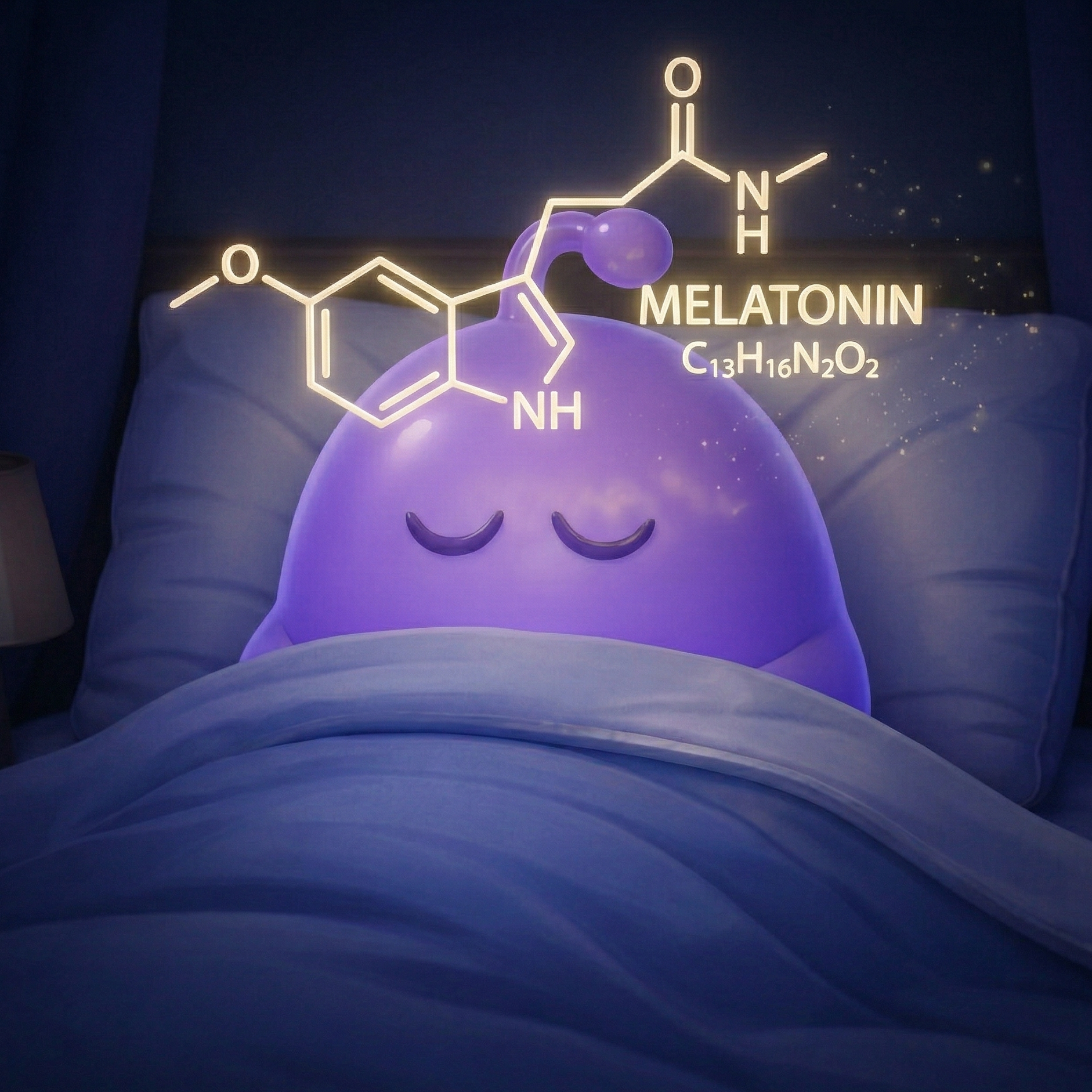
One more benefit: magnesium supports melatonin production. Melatonin is the hormone that signals to your body that it is time to sleep. Magnesium is a cofactor in several of the enzyme reactions that produce melatonin. If you are deficient, your melatonin output may be lower than it should be.
Which Type of Magnesium Is Best for Sleep?
Walk into any health food store and you will find at least six different forms of magnesium on the shelf. They are not all the same. Here is a breakdown of the three types most relevant to sleep.
Magnesium Glycinate (top pick for sleep)
Magnesium glycinate is magnesium bound to glycine, an amino acid. This is the form most sleep researchers and clinicians recommend. A 2025 randomized controlled trial published in Nature and Science of Sleep used 250mg of elemental magnesium as bisglycinate daily for 28 days and found a statistically significant improvement in insomnia severity scores compared to placebo. The ISI (Insomnia Severity Index) score dropped by 3.9 points in the magnesium group versus 2.3 points in the placebo group.
The reason glycinate works so well is twofold. First, the glycine molecule itself has calming properties. Glycine is an inhibitory neurotransmitter that can lower your core body temperature slightly, which is one of the physiological signals that triggers sleep onset. Second, the glycine binding makes this form gentler on your stomach than cheaper forms like magnesium oxide.
Magnesium L-Threonate (best for brain and deep sleep)
Magnesium L-threonate (MgT) is a newer form designed to cross the blood-brain barrier more efficiently. A 2024 randomized controlled trial in Sleep Medicine: X gave 80 adults 1g per day of MgT for 21 days. The MgT group showed significantly better deep sleep scores and REM sleep scores compared to the placebo group. Participants also reported better mood, more energy, and greater daytime productivity.
The trade-off is cost. Magnesium L-threonate is significantly more expensive per dose than glycinate, and each capsule contains less elemental magnesium (around 7-8% by weight versus 11-14% for glycinate). If your main goal is deeper sleep and you are willing to spend more, this is worth considering. If your main goal is falling asleep faster and reducing nighttime waking, glycinate is the better value.
Forms to avoid for sleep
- Magnesium oxide: cheap, poorly absorbed (only about 4% absorption rate), and likely to cause digestive discomfort.
- Magnesium citrate: reasonable absorption but primarily used for digestive support. Not specifically calming for sleep.
- Magnesium malate: malic acid is involved in energy production (Krebs cycle), so this form can be mildly stimulating before bed for some people.
"Magnesium bisglycinate 250mg, 28 days. Insomnia Severity Index dropped 3.9 points vs. 2.3 in placebo. Average sleep onset reduced by 17 minutes."
Source: Schuster et al., Nature and Science of Sleep, 2025
How Much Magnesium Should You Take and When?
The sweet spot for sleep is 200-400mg of elemental magnesium per day. A few things to pay attention to here.
“Elemental magnesium” is the actual amount of magnesium in the supplement, not the total weight of the compound. A 500mg capsule of magnesium glycinate contains only about 60-70mg of elemental magnesium because the glycine molecule makes up most of the weight. Always check the label for the elemental magnesium amount.
For timing, take your magnesium supplement 30-60 minutes before bed. This gives it enough time to start raising blood magnesium levels before you are trying to fall asleep.
For people new to magnesium supplements, start at the lower end (around 200mg elemental) and build up over a week or two. Starting too high can cause loose stools in some people, particularly with forms like citrate. Glycinate is generally gentler.
The recommended dietary allowance (RDA) for magnesium is 310-420mg per day depending on age and sex. Most people get some magnesium from food, so you typically do not need to supplement the full RDA. If you eat leafy greens, nuts, seeds, and whole grains regularly, a supplement of 150-200mg elemental magnesium before bed is usually sufficient.
Are You Magnesium Deficient? Signs to Look For
Here is an uncomfortable statistic: approximately 48% of Americans do not consume enough magnesium from their diet. The average American intake has fallen to roughly 200-275mg per day, well below the RDA of 310-420mg. A 2024 population-based study in the Journal of Affective Disorders analyzed 20,585 adults from the NHANES dataset and found a clear dose-response relationship between magnesium depletion and sleep problems, including a 3x higher risk of sleep apnea (odds ratio = 3.01) in those with the highest magnesium depletion scores.
The challenge with magnesium deficiency is that standard blood tests often miss it. Only about 1% of your body's total magnesium is in your bloodstream. The other 99% is stored in bones, muscles, and soft tissue. You can have a “normal” serum magnesium reading and still have low cellular magnesium.
Sleep-related signs:
- Difficulty falling asleep even when you are tired
- Waking up during the night for no clear reason
- Restless legs or muscle cramps that wake you at night
- Feeling tense or anxious at bedtime
Physical signs:
- Frequent muscle cramps or twitches (especially eyelid twitching)
- Fatigue that does not improve with sleep
- Headaches or migraines
- Constipation
Factors that deplete magnesium faster:
- Drinking alcohol regularly (alcohol increases magnesium excretion)
- High stress levels (stress hormones deplete magnesium)
- Eating a lot of processed foods (low in magnesium, high in compounds that block absorption)
- Taking certain medications, including proton pump inhibitors (PPIs) and diuretics
Magnesium Combinations: Pairing with L-Theanine and Ashwagandha
Magnesium works well on its own, but there is growing interest in combining it with other calming compounds.
Magnesium plus L-Theanine
L-Theanine is an amino acid found in green tea. It promotes alpha brain waves, which are the relaxed-but-alert state you feel after meditating. A 2022 study in Frontiers in Nutrition found that a novel magnesium-L-theanine complex produced significantly better sleep outcomes than L-theanine alone. The researchers identified a synergistic mechanism: L-theanine reduces NMDA receptor activity while magnesium independently blocks the same receptors. Together, they hit the same target from two angles.
The combination also increases GABA receptor expression more than either compound alone. Many people report that 200mg magnesium glycinate plus 100-200mg L-theanine before bed produces a noticeably more relaxed pre-sleep state than either supplement alone.
Magnesium plus Ashwagandha
Ashwagandha is an adaptogenic herb with well-documented cortisol-lowering effects. Since both magnesium and ashwagandha reduce evening cortisol, combining them targets the stress-related sleep disruption from multiple angles. This pairing makes particular sense for people whose sleep problems are primarily driven by anxiety or a racing mind at bedtime.
More is not always better. Start with magnesium alone for 1-2 weeks to establish a baseline. Add L-theanine if you want more support. Introduce ashwagandha after that if needed. This way you can tell what is actually helping and avoid spending money on combinations you do not need.
Frequently Asked Questions
How long does magnesium take to work for sleep?
Most people notice some effect within the first 1-2 weeks of consistent supplementation. The full benefit often takes 4-6 weeks as your body restores cellular magnesium levels. Do not judge it by one night. A 2025 trial found that improvements in insomnia severity scores were statistically significant by week 4 of daily supplementation.
Can you take too much magnesium?
Yes, but it is difficult to overdose from oral supplements in healthy adults because excess magnesium is excreted through the kidneys. The most common side effect of too much magnesium is loose stools or diarrhea, which is a signal to reduce your dose. The tolerable upper limit for supplemental magnesium in adults is 350mg elemental magnesium per day from supplements (not including food sources). People with kidney disease should consult a doctor before supplementing.
Is magnesium better than melatonin for sleep?
They work differently. Melatonin is a timing hormone that shifts your sleep-wake cycle and is particularly useful for jet lag or shift work. Magnesium works on the nervous system to reduce arousal and improve sleep quality throughout the night. For most people with general sleep difficulties, magnesium addresses the root issue more broadly. Melatonin is best used for specific circadian timing problems.
Tracking Whether It's Working
Taking a supplement without knowing if it is helping is just guesswork. The piliq app measures your actual sleep quality each night using your phone's sensors, tracking sleep stages, consistency, and the physiological signals that reflect how restorative your sleep actually was. If you start magnesium supplementation, piliq can show you whether your deep sleep score or sleep onset time actually improves over the following weeks. You get data, not guesses.
References
- Schuster J, Cycelskij I, Lopresti A, Hahn A. “Magnesium Bisglycinate Supplementation in Healthy Adults Reporting Poor Sleep: A Randomized, Placebo-Controlled Trial.” Nature and Science of Sleep. 2025. DOI: 10.2147/NSS.S524348
- Hausenblas HA, Lynch T, Hooper S, Shrestha A, Rosendale D, Gu J. “Magnesium-L-threonate improves sleep quality and daytime functioning in adults with self-reported sleep problems: A randomized controlled trial.” Sleep Medicine: X. 2024. DOI: 10.1016/j.sleepx.2024.100121
- Zhang Y, Chen C, Lu L, et al. “Association of magnesium intake with sleep duration and sleep quality: findings from the CARDIA study.” Sleep. 2021. DOI: 10.1093/sleep/zsab276
- Luo X, Tang M, Wei X, Peng Y. “Association between magnesium deficiency score and sleep quality in adults: A population-based cross-sectional study.” Journal of Affective Disorders. 2024. DOI: 10.1016/j.jad.2024.05.002
- Dasdelen MF, Er S, Kaplan B, et al. “A Novel Theanine Complex, Mg-L-Theanine Improves Sleep Quality via Regulating Brain Electrochemical Activity.” Frontiers in Nutrition. 2022. DOI: 10.3389/fnut.2022.874254
piliq measures your actual sleep quality every night. If you start taking magnesium, see whether your deep sleep score and sleep onset time actually improve, backed by real data.