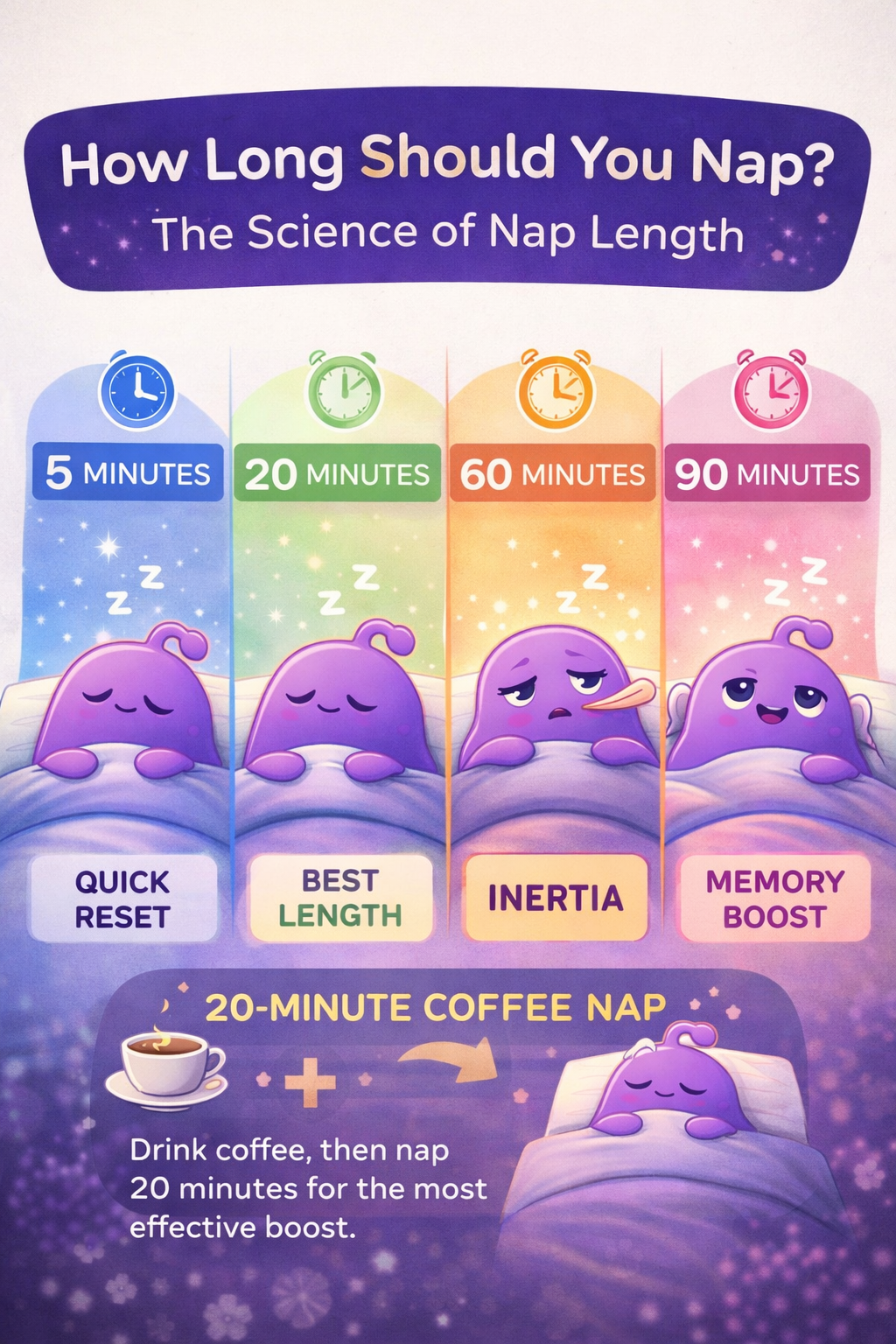
How Long Should You Nap? The Science of Nap Length
The ideal nap length is 20 minutes. That single number answers most people's question — it's long enough to restore alertness and short enough to avoid the groggy aftermath called sleep inertia. But the right nap length actually depends on what you need: a quick reset, a memory boost, or emergency recovery.
TL;DR
The ideal nap length is 20 minutes — long enough to restore alertness, short enough to avoid sleep inertia (the grogginess caused by waking from deep sleep). A 2025 EEG study found a 60-minute nap drops cognitive performance by 24–43% immediately after waking. For maximum effect, try a coffee nap: drink coffee immediately before a 20-minute nap, and you'll wake up just as caffeine hits your adenosine receptors. piliq tracks your daytime rest and helps you understand how napping affects your nightly sleep.
Why Nap Length Is the Most Important Variable
Not all naps are equal. A nap that's slightly too long can leave you feeling worse than if you hadn't napped at all — that's not a personal quirk, it's sleep inertia, and it's physiologically measurable. A 2025 EEG study found that brain activity (relative power) drops by 72.1% immediately after waking from a 60-minute nap, translating to a 24–43% drop in cognitive performance. That window of impairment lasts 15 to 30 minutes after waking.
When you fall asleep, your brain moves through progressively deeper stages — from light N1/N2 sleep into slow-wave N3 (deep) sleep. Waking out of deep sleep is disorienting. Learn more about sleep stages
The 5-Minute Nap: Minimal Investment, Real Returns
Five minutes sounds almost too short to matter. But a 2025 study found that a 5-minute nap restores alertness for 2 to 3 hours afterward. The mechanism: even the lightest stage of sleep (N1) clears adenosine — the chemical that builds up in your brain the longer you stay awake.
This nap works best when you need a micro-reset. A timer is non-negotiable.
The 20-Minute Power Nap: The Practical Gold Standard
NASA ran a study on pilots and found that a 26-minute nap improved performance by 34% and alertness by 100%. Twenty to 26 minutes keeps you solidly in N1 and N2 (light) sleep — you get meaningful recovery without touching the deep N3 sleep that causes grogginess.
Setting your alarm for 25 to 30 minutes gives you the buffer to actually fall asleep and still land in that window. This is the nap to default to.
If you feel still tired after sleeping even after regular nights, a 20-minute nap mid-afternoon often reduces accumulated sleep debt on the same day.
What Is Sleep Inertia and How Do You Avoid It?
Sleep inertia is the grogginess, disorientation, and cognitive fog you feel immediately after waking. The 2025 EEG data showing a 72.1% drop in brain power after a 60-minute nap illustrates why some people feel worse after napping. The severity scales directly with how deep into sleep you were when you woke up.
Three strategies to avoid sleep inertia:
- Keep naps at 20 minutes or under.
- Set a hard alarm.
- Use the coffee nap method.
"The grogginess after a long nap isn't weakness — it's biology. Your brain entered deep sleep, and waking from it costs."
The 90-Minute Nap: Full Sleep Cycle, Best for Memory
When you have more time, a 90-minute nap completes one full sleep cycle, including a period of REM sleep. A 2025 study by Shadab et al. confirmed that a 60-minute nap significantly improved alertness, sustained attention, and declarative memory.
Keep 90-minute naps to before 1pm if possible. Napping after 3pm consistently increases the risk of nighttime sleep disruption. Research has associated naps of 30 minutes or longer with increased cardiovascular and metabolic disease risk.
Does a Coffee Nap Actually Work?
Yes. Caffeine takes 20 to 30 minutes to be absorbed and reach the brain. So if you drink a full cup of coffee and immediately lie down for a 20-minute nap, you wake up at exactly the moment caffeine is hitting your adenosine receptors — simultaneously refreshed from light sleep and alert from caffeine.
Studies show coffee naps outperform either caffeine alone or a nap alone. Key conditions: coffee consumed right before the nap, nap under 30 minutes.
Frequently Asked Questions
How long should a nap be to avoid feeling groggy?
Keep your nap to 20 minutes or under. Grogginess after napping — called sleep inertia — is caused by waking out of deep (N3) sleep. A 2025 EEG study found that waking from a 60-minute nap drops cognitive performance by 24–43%. Staying in light N1/N2 sleep (which a 20-minute nap achieves) eliminates this effect almost entirely. Setting your alarm for 25–30 minutes gives you time to fall asleep and still land in that safe window.
Is it bad to nap after 3pm?
Yes, for most people. Napping after 3pm increases the risk of nighttime sleep disruption because it reduces the sleep pressure (adenosine buildup) your brain needs to fall asleep easily at night. If you need to nap late in the day, keep it to 10–20 minutes and avoid going longer.
What is sleep inertia and how do I avoid it?
Sleep inertia is the grogginess and cognitive impairment you feel immediately after waking from sleep. It happens because the brain takes time to shift from sleep-state biology back to full wakefulness, and that transition is harshest when you wake from deep (N3) sleep. A 2025 EEG study measured a 72.1% drop in brain relative power immediately after waking from a 60-minute nap. To avoid it: keep naps under 20 minutes, always use an alarm, or use the coffee nap method (drink coffee immediately before a 20-minute nap).
piliq tracks your daytime rest patterns and their correlation with nightly sleep quality, helping you find the optimal nap length and timing for your body.